

Discover easy, delicious recipes, helpful cooking tips, and inspiring meal ideas for every occasion. From comforting classics to exciting new flavors, Tofahaa helps you create memorable dishes with confidence.
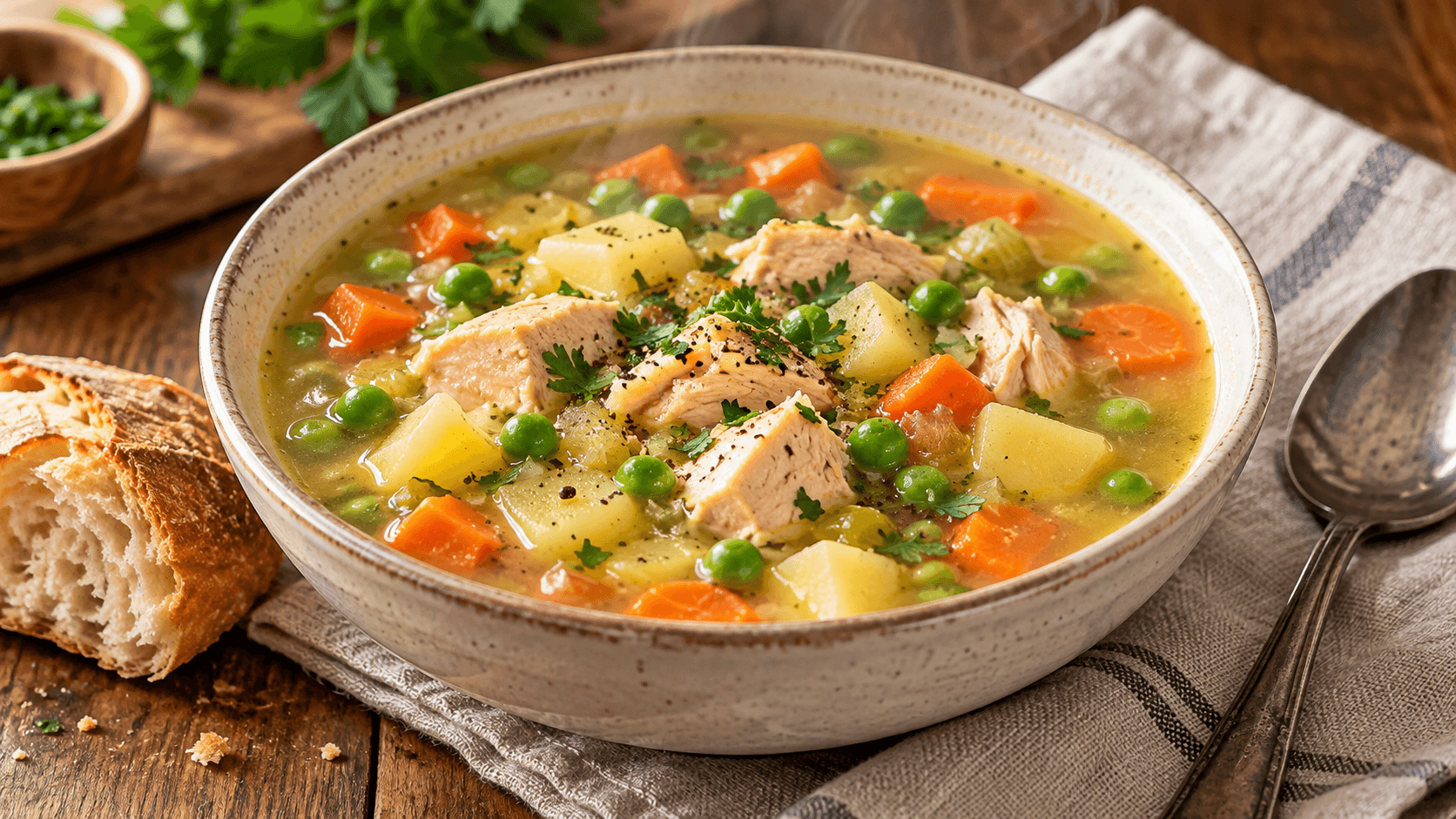
Pea Soup with Chicken: A Hearty, Easy Homemade Soup
A comforting, protein-rich soup made with tender chicken, sweet green peas, aromatic vegetables, and a flavorful broth.
Pea soup with chicken is a comforting homemade meal that combines tender pieces of chicken, sweet green peas, soft potatoes, and aromatic vegetables in a savory broth. It's simple to prepare, full of delicious flavor, and perfect for a cozy lunch or a satisfying weeknight dinner.
This easy chicken and pea soup uses everyday ingredients and frozen peas, making it convenient to prepare throughout the year. Carrots, onion, garlic, and herbs add depth to the broth, while potatoes give the soup a hearty texture. A portion of the peas can also be blended into the broth for a naturally creamy consistency without adding heavy cream.
Whether you're looking for an easy chicken soup recipe, a warming family dinner, or a practical way to use ingredients already in your kitchen, this pea soup with chicken is a delicious option. Serve it with crusty bread or warm dinner rolls for a complete, satisfying meal.
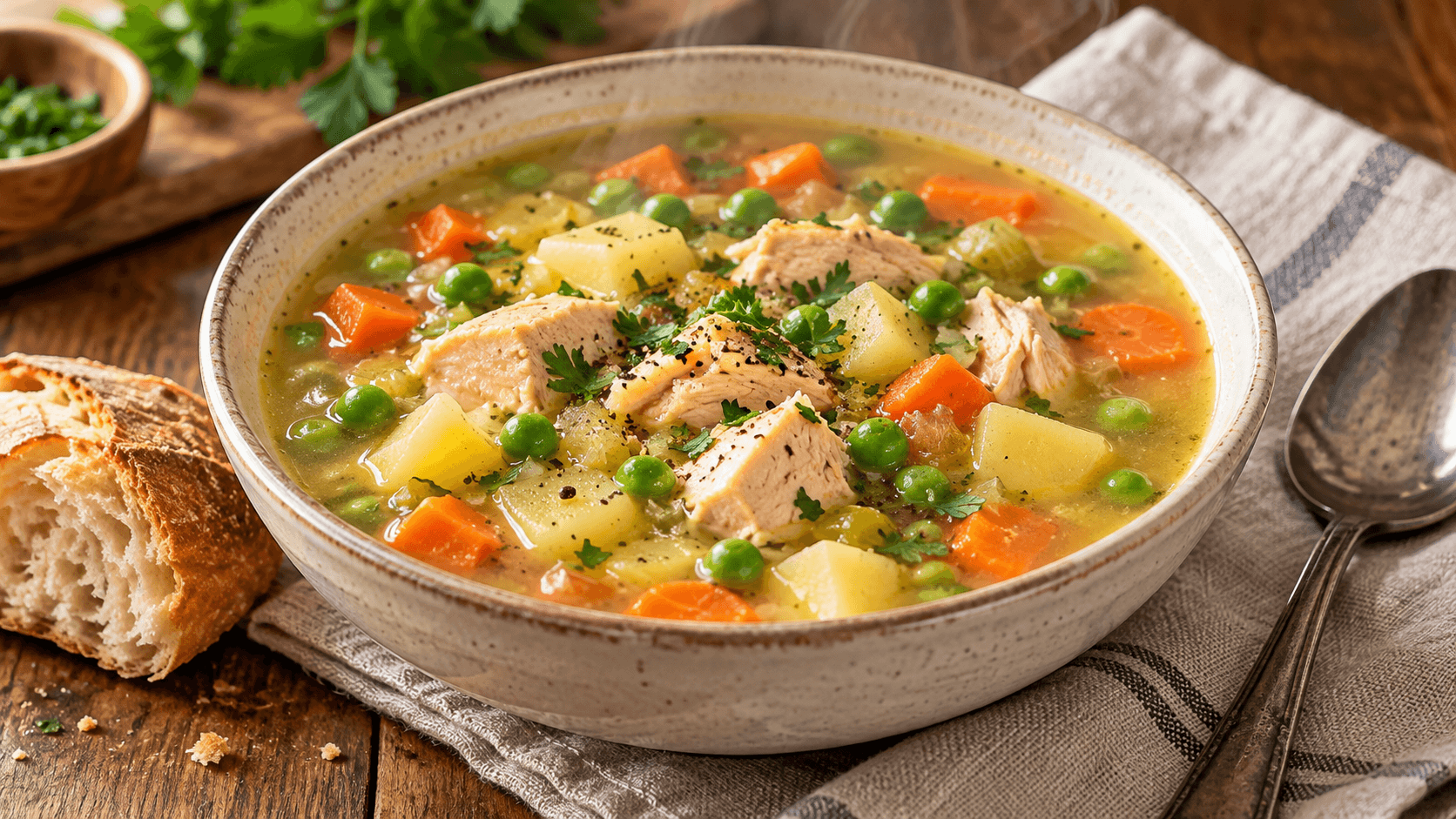
Simple everyday ingredients: Frozen peas, chicken, potatoes, carrots, and broth make this recipe easy to prepare.
Ready in 45 minutes: A practical option for busy weeknights when you want a homemade meal without hours of cooking.
Naturally creamy texture: Blending some of the cooked peas thickens the soup without requiring cream.
Family-friendly flavor: Sweet peas, tender chicken, and mild herbs create a balanced, comforting taste.
Easy to customize: Add more vegetables, adjust the herbs, or use leftover cooked chicken.
Great for meal prep: Make a batch ahead of time and enjoy convenient lunches or dinners throughout the week.
Frozen peas can be added directly to the pot without thawing.
Chicken thighs offer a richer flavor, while chicken breast gives the soup a leaner finish.
Yukon Gold or red potatoes hold their shape well. Russet potatoes work too but may break down more easily.
Low-sodium broth makes it easier to control the salt level.
Cut ingredients evenly. Keep the chicken and potatoes in similarly sized pieces so they cook at a consistent rate.
Build flavor before adding broth. Sautéing the onion, carrots, and garlic first creates a more flavorful soup base.
Keep the soup at a gentle simmer. A rolling boil can break apart the potatoes and make the chicken less tender.
Blend only part of the soup. This gives the broth a creamy body while preserving the texture of the chicken and vegetables.
Add acid at the end. A little lemon juice brightens the flavor, particularly if the broth tastes flat.
Check the chicken with a thermometer. The thickest pieces should reach 165°F (74°C) for food safety.
Rotisserie chicken: Replace the raw chicken with about 2–3 cups of shredded cooked chicken. Add it during the last 5–10 minutes, just long enough to heat through. Adjust the simmering time to ensure the potatoes are tender.
Chicken thighs: Use boneless, skinless thighs for a richer, more succulent soup.
Fresh peas: Substitute fresh peas for frozen peas in equal amounts. Simmer until tender, checking them after a few minutes.
Vegetable additions: Add diced celery with the onion and carrots, or stir in a handful of spinach near the end.
Dairy-free version: The basic recipe is naturally dairy-free when made with dairy-free broth and suitable garnishes.
Creamier soup: Stir in ¼ cup of heavy cream after cooking if you prefer a richer finish, or blend a larger portion of the peas.
Herb variation: Substitute dried rosemary or Italian seasoning for the thyme, using a modest amount so the herbs do not overpower the peas.
Gluten-free option: The recipe can be gluten-free when the broth and all packaged ingredients are labeled or verified gluten-free.
Pea soup with chicken is satisfying on its own, but these accompaniments make it even better:
Crusty bread: Sourdough, French bread, or a warm baguette is perfect for soaking up the broth.
Dinner rolls: Soft rolls provide a comforting side for a family meal.
Fresh green salad: A simple salad with cucumber, tomatoes, and vinaigrette balances the warm, savory soup.
Garlic toast: Adds a crisp texture and a savory flavor.
Extra toppings: Try fresh parsley, cracked black pepper, or a small squeeze of lemon juice just before serving.
For a simple lunch, serve a medium bowl of soup with toasted bread. For dinner, pair it with a salad and rolls.
Refrigerator: Let the soup cool promptly and transfer it to shallow, airtight containers. Refrigerate within two hours of cooking and use within 3–4 days.
Freezer: Freeze cooled soup in freezer-safe containers or individual portions for up to 2–3 months for best quality. Leave a little room at the top for expansion. Potatoes may become softer after thawing, but the soup will still be suitable for reheating.
Stovetop reheating: Warm the soup in a saucepan over medium-low heat, stirring occasionally, until it reaches 165°F (74°C). Add a splash of broth or water if it has thickened.
Microwave reheating: Place a portion in a microwave-safe bowl, cover loosely, and heat in intervals, stirring between each interval. Check that the soup reaches 165°F (74°C) throughout.
Make-ahead tip: You can prepare the soup a day ahead. The flavors will meld as it rests, and the broth may thicken slightly overnight.
Overcooking the peas: Long cooking can turn bright green peas dull and mushy. Add them toward the end.
Adding too much salt early: Broth can vary significantly in sodium content. Start with a modest amount and season again before serving.
Cutting the potatoes too large: Large chunks take longer to cook and may leave the vegetables unevenly tender.
Blending the entire pot unnecessarily: This removes the chunky texture that makes the soup hearty. Blend only a portion if you want a creamier broth.
Skipping the final taste test: A small amount of lemon juice, salt, or black pepper can make a noticeable difference in the finished flavor.
Yes. Frozen peas are ideal because they're convenient and retain their color and sweetness when cooked briefly. Add them directly to the simmering soup without thawing first.
Absolutely. Shredded rotisserie chicken or leftover cooked chicken works well. Add it near the end of cooking so it heats through without becoming dry. Cook the potatoes and vegetables until tender before adding the cooked chicken.
Blend about 1 cup of the cooked peas and broth, then stir the mixture back into the pot. You can also mash some of the cooked potatoes against the side of the pot. Both methods thicken the soup without requiring flour.
Yes. Leave out the potatoes and add extra carrots or peas. The soup will be lighter and less starchy, so blending some of the peas can help create a fuller texture. You may need slightly less cooking time.
Yes. Store it in individual airtight containers and refrigerate for 3–4 days. Reheat portions thoroughly before eating. If you're planning to freeze the soup, remember that the potatoes may soften after thawing.
Yes, but the recipe will change considerably. Dried split peas require much longer cooking and more liquid than frozen green peas. For best results, follow a split-pea soup recipe designed around dried peas rather than substituting them directly into these instructions.
This easy pea soup with chicken is a delicious way to bring tender chicken, sweet green peas, and wholesome vegetables together in one comforting pot. With simple ingredients, a flavorful broth, and an optional creamy finish, it's a versatile recipe for lunch or dinner any day of the week.
Make a batch for your next cozy meal, customize it with your favorite vegetables, and serve it with fresh bread for a satisfying homemade dinner. Explore more easy recipes and practical cooking inspiration at Tofahaa – Quick & Tasty Recipes.
▶ Chicken Teriyaki with Japanese Potato Salad
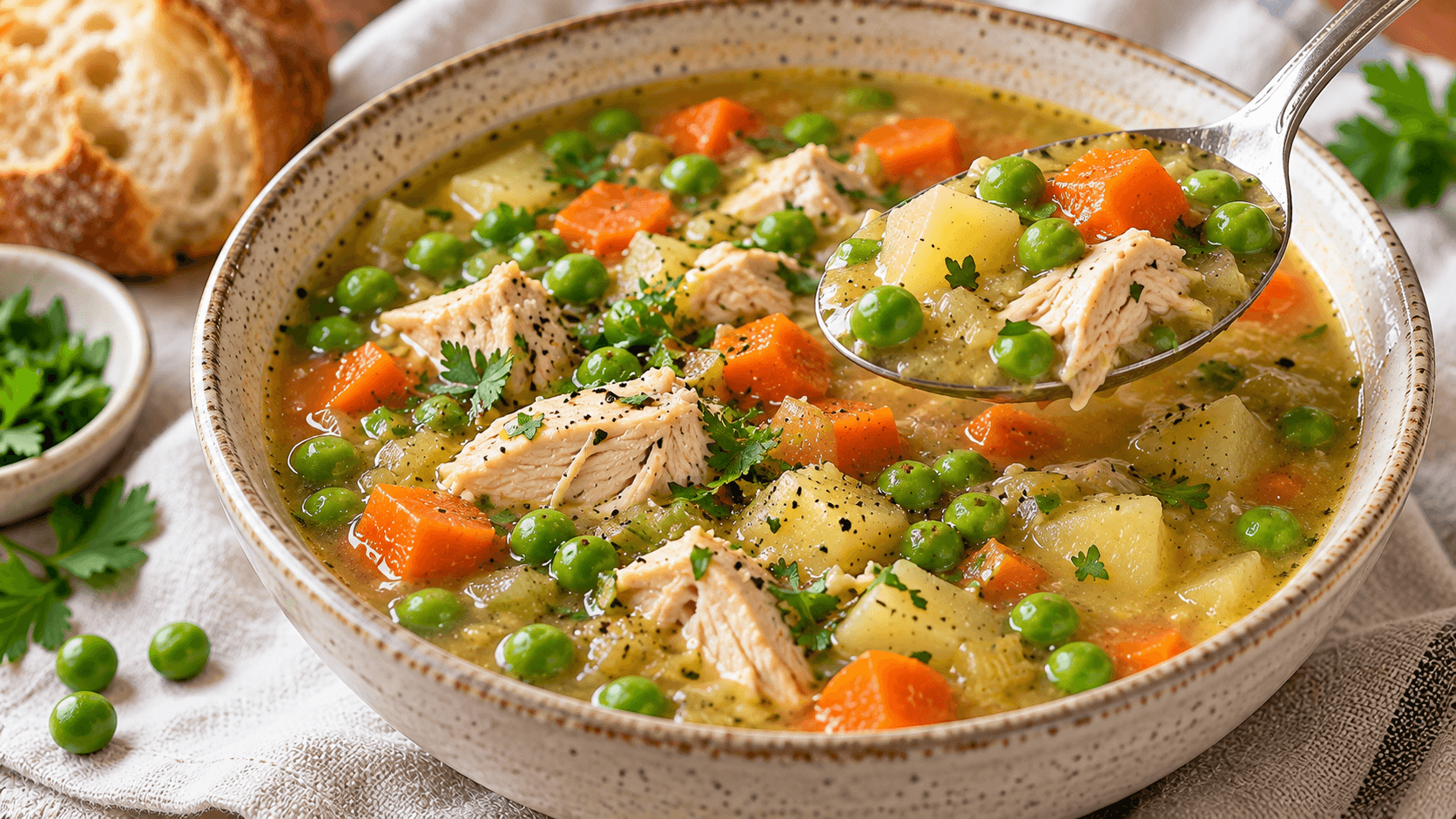
Pea Soup with Chicken: A Hearty, Easy Homemade Soup
A comforting, protein-rich soup made with tender chicken, sweet green peas, aromatic vegetables, and a flavorful broth.
Pea soup with chicken is a comforting homemade meal that combines tender pieces of chicken, sweet green peas, soft potatoes, and aromatic vegetables in a savory broth. It's simple to prepare, full of delicious flavor, and perfect for a cozy lunch or a satisfying weeknight dinner.
This easy chicken and pea soup uses everyday ingredients and frozen peas, making it convenient to prepare throughout the year. Carrots, onion, garlic, and herbs add depth to the broth, while potatoes give the soup a hearty texture. A portion of the peas can also be blended into the broth for a naturally creamy consistency without adding heavy cream.
Whether you're looking for an easy chicken soup recipe, a warming family dinner, or a practical way to use ingredients already in your kitchen, this pea soup with chicken is a delicious option. Serve it with crusty bread or warm dinner rolls for a complete, satisfying meal.
Simple everyday ingredients: Frozen peas, chicken, potatoes, carrots, and broth make this recipe easy to prepare.
Ready in 45 minutes: A practical option for busy weeknights when you want a homemade meal without hours of cooking.
Naturally creamy texture: Blending some of the cooked peas thickens the soup without requiring cream.
Family-friendly flavor: Sweet peas, tender chicken, and mild herbs create a balanced, comforting taste.
Easy to customize: Add more vegetables, adjust the herbs, or use leftover cooked chicken.
Great for meal prep: Make a batch ahead of time and enjoy convenient lunches or dinners throughout the week.
Frozen peas can be added directly to the pot without thawing.
Chicken thighs offer a richer flavor, while chicken breast gives the soup a leaner finish.
Yukon Gold or red potatoes hold their shape well. Russet potatoes work too but may break down more easily.
Low-sodium broth makes it easier to control the salt level.
Cut ingredients evenly. Keep the chicken and potatoes in similarly sized pieces so they cook at a consistent rate.
Build flavor before adding broth. Sautéing the onion, carrots, and garlic first creates a more flavorful soup base.
Keep the soup at a gentle simmer. A rolling boil can break apart the potatoes and make the chicken less tender.
Blend only part of the soup. This gives the broth a creamy body while preserving the texture of the chicken and vegetables.
Add acid at the end. A little lemon juice brightens the flavor, particularly if the broth tastes flat.
Check the chicken with a thermometer. The thickest pieces should reach 165°F (74°C) for food safety.
Rotisserie chicken: Replace the raw chicken with about 2–3 cups of shredded cooked chicken. Add it during the last 5–10 minutes, just long enough to heat through. Adjust the simmering time to ensure the potatoes are tender.
Chicken thighs: Use boneless, skinless thighs for a richer, more succulent soup.
Fresh peas: Substitute fresh peas for frozen peas in equal amounts. Simmer until tender, checking them after a few minutes.
Vegetable additions: Add diced celery with the onion and carrots, or stir in a handful of spinach near the end.
Dairy-free version: The basic recipe is naturally dairy-free when made with dairy-free broth and suitable garnishes.
Creamier soup: Stir in ¼ cup of heavy cream after cooking if you prefer a richer finish, or blend a larger portion of the peas.
Herb variation: Substitute dried rosemary or Italian seasoning for the thyme, using a modest amount so the herbs do not overpower the peas.
Gluten-free option: The recipe can be gluten-free when the broth and all packaged ingredients are labeled or verified gluten-free.
Pea soup with chicken is satisfying on its own, but these accompaniments make it even better:
Crusty bread: Sourdough, French bread, or a warm baguette is perfect for soaking up the broth.
Dinner rolls: Soft rolls provide a comforting side for a family meal.
Fresh green salad: A simple salad with cucumber, tomatoes, and vinaigrette balances the warm, savory soup.
Garlic toast: Adds a crisp texture and a savory flavor.
Extra toppings: Try fresh parsley, cracked black pepper, or a small squeeze of lemon juice just before serving.
For a simple lunch, serve a medium bowl of soup with toasted bread. For dinner, pair it with a salad and rolls.
Refrigerator: Let the soup cool promptly and transfer it to shallow, airtight containers. Refrigerate within two hours of cooking and use within 3–4 days.
Freezer: Freeze cooled soup in freezer-safe containers or individual portions for up to 2–3 months for best quality. Leave a little room at the top for expansion. Potatoes may become softer after thawing, but the soup will still be suitable for reheating.
Stovetop reheating: Warm the soup in a saucepan over medium-low heat, stirring occasionally, until it reaches 165°F (74°C). Add a splash of broth or water if it has thickened.
Microwave reheating: Place a portion in a microwave-safe bowl, cover loosely, and heat in intervals, stirring between each interval. Check that the soup reaches 165°F (74°C) throughout.
Make-ahead tip: You can prepare the soup a day ahead. The flavors will meld as it rests, and the broth may thicken slightly overnight.
Overcooking the peas: Long cooking can turn bright green peas dull and mushy. Add them toward the end.
Adding too much salt early: Broth can vary significantly in sodium content. Start with a modest amount and season again before serving.
Cutting the potatoes too large: Large chunks take longer to cook and may leave the vegetables unevenly tender.
Blending the entire pot unnecessarily: This removes the chunky texture that makes the soup hearty. Blend only a portion if you want a creamier broth.
Skipping the final taste test: A small amount of lemon juice, salt, or black pepper can make a noticeable difference in the finished flavor.
Yes. Frozen peas are ideal because they're convenient and retain their color and sweetness when cooked briefly. Add them directly to the simmering soup without thawing first.
Absolutely. Shredded rotisserie chicken or leftover cooked chicken works well. Add it near the end of cooking so it heats through without becoming dry. Cook the potatoes and vegetables until tender before adding the cooked chicken.
Blend about 1 cup of the cooked peas and broth, then stir the mixture back into the pot. You can also mash some of the cooked potatoes against the side of the pot. Both methods thicken the soup without requiring flour.
Yes. Leave out the potatoes and add extra carrots or peas. The soup will be lighter and less starchy, so blending some of the peas can help create a fuller texture. You may need slightly less cooking time.
Yes. Store it in individual airtight containers and refrigerate for 3–4 days. Reheat portions thoroughly before eating. If you're planning to freeze the soup, remember that the potatoes may soften after thawing.
Yes, but the recipe will change considerably. Dried split peas require much longer cooking and more liquid than frozen green peas. For best results, follow a split-pea soup recipe designed around dried peas rather than substituting them directly into these instructions.
This easy pea soup with chicken is a delicious way to bring tender chicken, sweet green peas, and wholesome vegetables together in one comforting pot. With simple ingredients, a flavorful broth, and an optional creamy finish, it's a versatile recipe for lunch or dinner any day of the week.
Make a batch for your next cozy meal, customize it with your favorite vegetables, and serve it with fresh bread for a satisfying homemade dinner. Explore more easy recipes and practical cooking inspiration at Tofahaa – Quick & Tasty Recipes.
▶ Chicken Teriyaki with Japanese Potato Salad

✨ We share quick, delicious, and easy-to-follow recipes made with everyday ingredients, helping you create tasty homemade meals with confidence and joy. Happy cooking!
Sign up to receive email updates on new recipes.
Every recipe tells a story, and every meal brings people together. Tofahaa is your trusted source for tasty recipes, cooking inspiration, and practical kitchen advice that helps turn everyday ingredients into memorable homemade meals.
Discover easy, delicious, and healthy recipes for every occasion. Step-by-step guides, meal ideas, and cooking tips for home chefs of all levels.


